


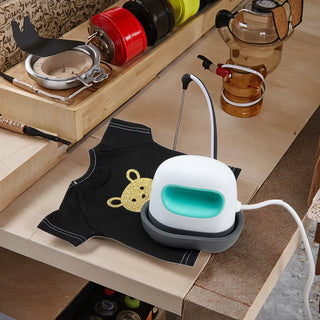


DTF transfers have become a widely preferred method for applying high-quality prints onto textiles due to their flexibility, durability, and compatibility with different fabrics. One of the most common questions among beginners and small-scale users is whether a household iron can replace a professional heat press during application. While heat presses are specifically engineered to deliver consistent temperature and pressure, an iron can still be used under certain conditions. However, the process requires careful attention to technique, timing, and surface preparation to avoid poor adhesion or damage to the design. Understanding the limitations and best practices of using an iron is essential for achieving acceptable results without professional equipment.
Can DTF Transfers Be Applied with an Iron?
Yes, DTF transfers can technically be applied with an iron, but the outcome depends heavily on execution. Unlike heat presses, irons do not provide uniform pressure or consistent heat distribution across the transfer surface. This inconsistency can affect how well the adhesive powder bonds to the fabric, leading to uneven results. Still, for hobbyists or those testing small batches, ironing can serve as a temporary solution. It is important to apply steady pressure, avoid steam, and ensure the iron reaches an adequate temperature. While not ideal for commercial use, ironing remains a viable alternative when proper care and technique are applied during the process.
Are DTF Transfers Designed for Heat Press Only?
DTF transfers are primarily engineered to be used with heat presses because these machines ensure controlled heat and pressure application. The adhesive layer in DTF films requires a specific temperature range and consistent pressure to properly melt and bond with the fabric fibers. Heat presses guarantee this uniformity, which directly impacts durability and wash resistance. When using an iron, these conditions are harder to replicate, increasing the risk of incomplete adhesion. While not strictly limited to heat press usage, DTF transfers achieve their intended performance only when applied with professional equipment. Therefore, ironing should be considered a workaround rather than a standard method for application.
Can You Use a Regular or Household Iron for DTF Transfers?
A regular household iron can be used for DTF transfers, but it comes with limitations that must be acknowledged. Most irons are not designed for precise temperature control across their entire surface, and pressure is applied manually rather than mechanically. This makes it difficult to achieve consistent results, especially on larger designs. However, if the iron has a flat soleplate and adjustable heat settings, it can still be used effectively for smaller transfers. The key is to preheat the garment, apply firm pressure, and work in sections to ensure even bonding. Users should also disable steam settings and use a protective sheet during application to improve outcomes.
Differences Between Heat Press and Iron Application
The main difference between a heat press and an iron lies in consistency and control. A heat press applies even pressure across the entire transfer while maintaining a stable temperature throughout the pressing duration. In contrast, an iron relies on manual pressure and fluctuating heat levels, which can lead to uneven adhesion. Heat presses also allow users to set precise time, temperature, and pressure parameters, ensuring repeatable results. Irons, on the other hand, require constant adjustment and monitoring. This difference significantly impacts durability, especially after multiple washes. As a result, heat presses remain the preferred choice for professional-grade DTF transfer applications.
How to Apply DTF Transfers with an Iron Step by Step
Applying DTF transfers with an iron requires a structured approach to minimize errors. First, place the garment on a flat, heat-resistant surface and preheat it for a few seconds to remove moisture. Position the transfer film correctly, ensuring it is aligned without wrinkles. Set the iron to a high temperature suitable for cotton fabrics and turn off the steam function. Apply firm, even pressure for about 15 to 20 seconds, moving slowly across the design if necessary. Allow the transfer to cool before peeling the film. Finally, perform a second press using parchment paper to improve adhesion and enhance durability of the print.
Required Temperature, Pressure, and Time Settings
When using an iron, achieving the correct balance of temperature, pressure, and time is critical. The recommended temperature typically falls between 150°C and 165°C, although exact settings depend on the fabric type. Since irons lack precise controls, users should test heat levels beforehand. Pressure should be firm and consistent, applied evenly across all parts of the design. Time should range between 15 and 25 seconds per section, ensuring adequate bonding. Insufficient pressure or low temperature can cause peeling, while excessive heat may damage the transfer. Careful calibration of these factors significantly improves the success rate of ironing DTF transfers.
Can You Iron on DTF Transfers Without a Heat Press?
Yes, it is possible to iron on DTF transfers without a heat press, but results will vary depending on technique and materials. Without the controlled environment of a heat press, users must compensate by applying more attention to detail. This includes working on a stable surface, using consistent pressure, and ensuring complete coverage of the design. Smaller designs tend to perform better when ironed, as they require less surface uniformity. While ironing is a practical option for occasional use, it is not recommended for bulk production or professional applications due to its limitations in consistency and efficiency.
Best Practices for Even Heat Distribution
To achieve even heat distribution when using an iron, users should focus on technique and preparation. Start by using a hard, flat surface instead of an ironing board, as soft surfaces absorb pressure. Apply the iron in a slow, methodical motion, ensuring each section receives equal attention. Avoid tilting the iron, as this creates uneven pressure points. Using a protective sheet such as parchment paper helps distribute heat more evenly and prevents direct contact with the transfer. Repeating the pressing process in multiple passes can also improve adhesion. These practices help compensate for the inherent limitations of household irons during DTF application.
Common Problems When Using an Iron for DTF Transfers
Using an iron for DTF transfers often introduces several common issues that can affect the final result. One of the most frequent problems is uneven adhesion, where certain parts of the design fail to bond properly due to inconsistent heat or pressure. Another issue is overheating, which can cause the design to warp or discolor. Users may also experience partial peeling after washing if the transfer was not applied correctly. These challenges are primarily caused by the lack of precise control in ironing compared to heat pressing. Understanding these risks allows users to take preventive measures and improve the overall quality of their application process.
Peeling, Cracking, and Adhesion Issues
Peeling, cracking, and weak adhesion are the most noticeable problems when ironing DTF transfers. These issues usually occur when the adhesive layer does not fully melt or bond with the fabric fibers. Insufficient pressure or uneven heat distribution are common causes. Cracking may appear after washing if the transfer was not properly sealed during application. To minimize these risks, users should apply consistent pressure, ensure correct temperature, and perform a second press after peeling. Allowing the transfer to cool before peeling also improves adhesion. Addressing these factors helps maintain the durability and visual quality of the transferred design.
Tips to Improve Results When Ironing DTF Transfers
Improving results when ironing DTF transfers requires attention to detail and proper technique. Always preheat the garment to remove moisture and create a stable surface for application. Use a flat, hard base instead of a soft ironing board to maximize pressure effectiveness. Apply the iron evenly across the design, ensuring no area is left under-pressed. A protective sheet such as parchment paper should be used to distribute heat and prevent damage. Performing a second press after peeling enhances adhesion and durability. Testing on a sample fabric before final application is also recommended. These adjustments significantly increase the success rate of using an iron for DTF transfers.
When Should You Avoid Using an Iron for DTF Transfers?
There are situations where using an iron for DTF transfers is not recommended due to the limitations of the method. Large designs, intricate patterns, or bulk production processes require consistent heat and pressure that only a heat press can provide. Delicate fabrics may also be damaged by uneven heating or excessive pressure from an iron. Additionally, commercial applications demand durability and repeatability, which are difficult to achieve with manual ironing. In such cases, relying on professional equipment ensures better results and reduces the risk of product failure. Understanding when not to use an iron is as important as knowing how to use it effectively.
Final Comparison Iron vs Heat Press for DTF Transfers
Comparing an iron and a heat press highlights significant differences in performance, consistency, and efficiency. A heat press offers precise control over temperature, pressure, and time, resulting in high-quality and durable transfers. It is the preferred option for professional use and bulk production. An iron, on the other hand, provides flexibility and accessibility for beginners or small-scale applications but lacks consistency. While it can produce acceptable results with proper technique, it requires more effort and carries higher risk of errors. Ultimately, the choice depends on usage needs, but for reliable and repeatable outcomes, a heat press remains the superior solution.
